Blogs
Monitoring Non-Revenue Water and Wastewater Leaks in Mexico: A Critical Step Toward Sustainable Water Management
November 5, 2025
Water is one of Mexico’s most vital and strained resources. With diverse geography, a rapidly growing population, and large urban centers, like Mexico City, placing enormous demand on water infrastructure, the issue of undetected leaking of wastewater and non-revenue water (NRW) is a national challenge.
“In addition to this water crisis, 46% of the liquid is lost due to leaks in the supply networks, 80% of the water bodies are contaminated by industrial discharges and only one in 100 liters of rainwater is captured for reuse,” an Excelsior.com article stated. It is frequently covered by the press that wastewater exfiltration and leaks in the water supply are of critical concern.
Addressing the problem of NRW is crucial for securing the country’s water future. NRW is water that is produced but never reaches the customer due to leaks, theft, or metering inaccuracies. In collaboration with our trusted channel partner, Integrored, ASTERRA is proud to play a role in this effort.
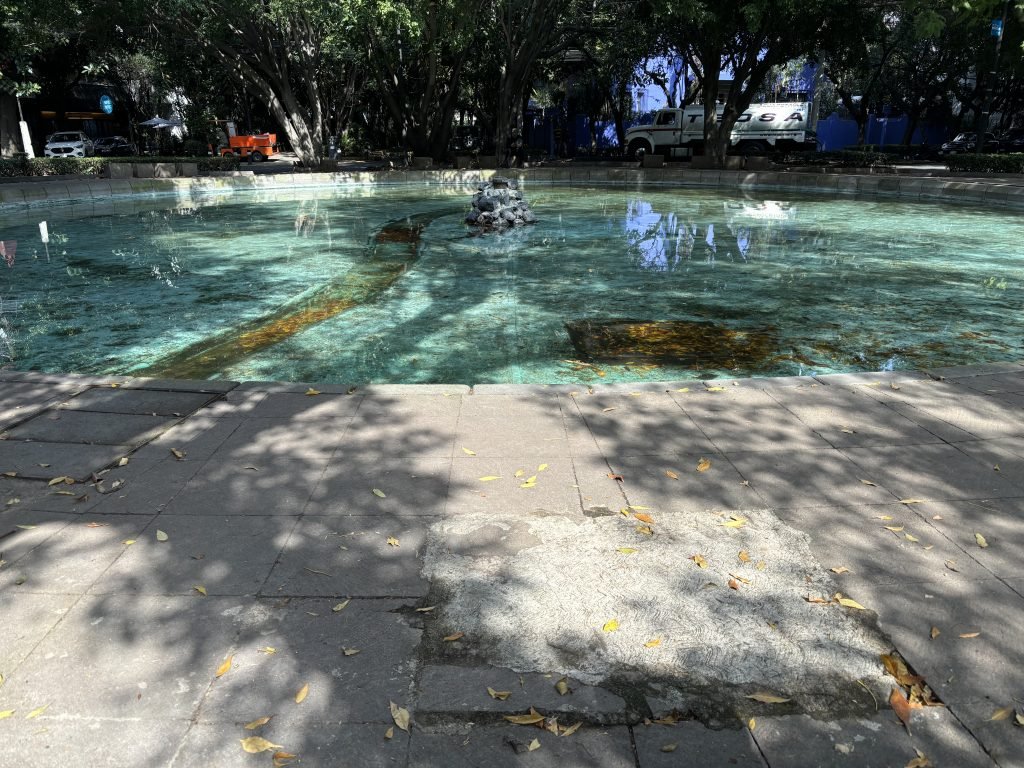
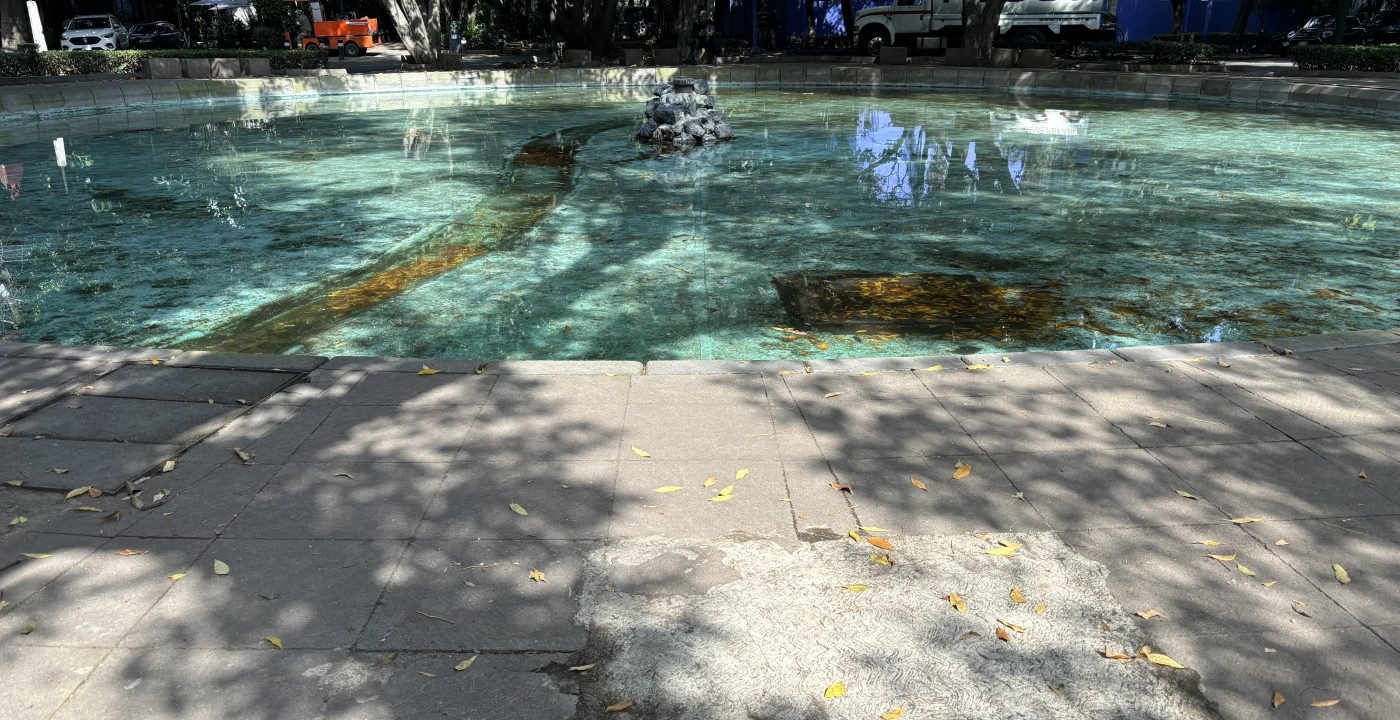
A community fountain in CDMX provides aesthetic beauty but is in need of infrastructure repair.
Mexico’s varied and complex landscape poses significant challenges for water management. From region to region, Mexico is a combination of arid deserts in the north to tropical rainforests in the south, with high mountain ranges, valleys, and coastal plains in between. In the north, water scarcity is a persistent issue, exacerbated by agricultural demands and climate change. In contrast, southern regions may experience heavy rainfall but lack the infrastructure to effectively store and distribute water.
This geographic diversity means that no single water solution fits all of Mexico’s regions. NRW management strategies must be tailored to local topographies, climate conditions, and infrastructure capabilities.
At the heart of Mexico’s water crisis lies Mexico City, the largest city in the country and one of the largest metropolitan areas in the world, with a population exceeding 20 million. Built on a former lakebed, the city faces geological instability, land subsidence, and outdated infrastructure, all of which contribute to significant water losses.
Studies estimate that Mexico City loses 40 – 46% of its water supply to leaks and inefficiencies. In a city of this scale, every percentage point of water loss represents millions of gallons and significant financial implications. Monitoring and reducing NRW here are not just a municipal issue; it is a national imperative.
In fact, in a recent CNN.com article, the concerns were described as one of the world’s biggest cities is facing a severe water crisis as a tangle of problems, including geography, chaotic urban development and leaky infrastructure, compounded by the impacts of climate change.
Thankfully, Integrored and ASTERRA are collaborating to improve this situation. ASTERRA’s Latin America Sales Manager is Cesar Garcia. Through his efforts, as well as the efforts of ASTERRA promoter Angel García Hernández, Integrored projects are underway. For example, one region is implementing processes to modernize its land management. They use the EO Discover 2.0 platform, which uses data from satellites and geospatial technology to get near-immediate likely leak locations. Then, they deploy crews right to those locations to fix leaks and reduce wasted water. This is making water programs more sustainable and allowing this region to have reliable water services and sustainability in its service delivery. Operating agencies have reliable and up-to-date information for better planning, operation, billing, and reporting.

City water and drainage infrastructure in need of improvements.
ASTERRA’s advanced satellite-based leak detection technology is helping utilities across Mexico locate hidden leaks with unprecedented accuracy and speed. By using L-band synthetic aperture radar (SAR) data, ASTERRA identifies moisture anomalies that indicate underground leaks, even in areas with complex terrain or dense urban infrastructure.
Integrored plays a pivotal role in sharing information about ASTERRA solutions and implementing these solutions on the ground. With deep local expertise, regulatory knowledge, and long-standing relationships with utilities and municipalities, Integrored ensures that ASTERRA’s technology is effectively deployed and customized to meet the unique needs of each region.
Together, we are enabling water utilities in Mexico to:
In an interview with water expert and CDMX native, Angel García Hernández, we learned that each region of Mexico has its own story when it comes to water:
Northern Mexico struggles with chronic water shortages and relies heavily on groundwater, making leak detection and loss prevention essential for sustainability. Cities in this region include Monterrey and Hermosillo. In addition to farming, there is an increasing presence of manufacturing in this region, straining the already low water supply, particularly from the Colorado River and the Rio Grande River, both of which flow from within the Unites States. According to USGS.com (referencing NASA), only 10% of the water from the Colorado River makes it into Mexico due to usage, dams, and levees along its path.
Central Mexico, home to Mexico City, faces enormous infrastructure stress due to high population density, aging water systems, and lack of water.
This region is serviced by the Cutzamala system. Angel described the Cutzamala system and the related geographic challenges of CDMX. Understanding the geography and these challenges is essential. Built in the 1960s, the Cutzamala system is a water processing, storage, and distribution system for drinking and fresh water for Mexico City and Mexico. It is considered one of the largest water supply systems in the world. Water must be pumped from very low points in the valley to very high points in the mountains. For many citizens, water must be transported in great quantities.
The persistent drought in Mexico, coupled with increased consumption, meant that this reservoir was dangerously low in 2024. However, a Mexico News Daily article shared a report from the National Water Commission (Conagua), stating that as of April 1, 2025, “the Cutzamala reservoir system — which provides almost a third of the capital’s water and supplies several suburban areas within neighboring México state — was at 56% capacity.” While the volume of available water is critical, the processing costs and energy requirements to process and transport must also be effectively managed. ASTERRA provides an efficient solution for all these problems.
Other regions, including the southern Mexican states, such as Chiapas and Oaxaca, have abundant water sources, but often lack modern infrastructure to transport and manage water efficiently.
Coastal areas, like those in the Yucatán Peninsula, must deal with challenges related to saline intrusion into the water supply and protecting freshwater aquifers.
In each region, ASTERRA and Integrored are working with local utilities to tailor water management solutions that respect the environmental, economic, and cultural characteristics of the region.
In February, ASTERRA began operations in Irapuato, Guanajuato, on a revolutionary project for the recovery of floodwaters and the reduction of unaccounted water. ASTERRA’s EO Discover 2.0 is a pivotal tool for transforming how Mexico is managing water.
The ASTERRA LATAM 2025 Partner Summit was held in CDMX this past March. During this event, success stories, learnings, and valuable experiences were shared. It all reinforces our shared commitment to reducing water loss in the region. Cesar Garcia said, “Together, ASTERRA and Integrored are continuing our strong efforts in Mexico to detect hidden leaks without the need for excavation. We’re monitoring infrastructure in real time, delivering actionable data, and maximizing return on investment. ASTERRA’s regional partners play a vital role in understanding local water challenges, implementing effective solutions, and ensuring successful results.”
Promoting these collaborations allows the people of Mexico to move toward a more sustainable future. Reducing non-revenue water is one of the most cost-effective and impactful steps Mexico can take toward long-term water security. By recovering lost water, utilities can delay costly new water projects, serve more people with existing resources, and improve the reliability of supply.
ASTERRA is proud to help pave the way toward a more water-secure future for Mexico. With cutting-edge technology and deep local engagement, we help utilities across Mexico and Latin America turn invisible water loss into visible gains.
A year-end look at how ASTERRA solutions scaled across regions while delivering local, actionable outcomes Water utilities and infrastructure agencies...
Water is one of Mexico’s most vital and strained resources. With diverse geography, a rapidly growing population, and large urban...

By Roy Zenou, Account Manager at ASTERRA Earlier this year, Emma Lean of SUEZ, together with Nick Haskins—whose influence still...