Blogs
Global Problems, Local Impact: How Utilities Worldwide Used AI to Find, Fix, and Future-Proof Infrastructure
February 3, 2026
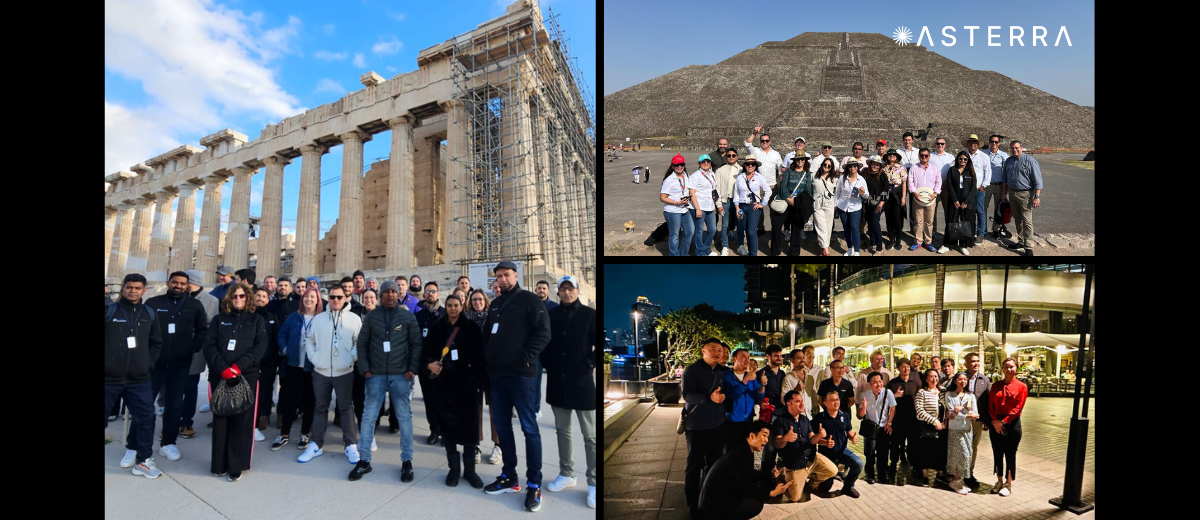
A year-end look at how ASTERRA solutions scaled across regions while delivering local, actionable outcomes
Water utilities and infrastructure agencies worldwide are under pressure like never before. Aging pipelines, climate stress, shrinking budgets, and rising demands for transparency are converging at once. The challenges may be global, but success depends on local solutions that are precise, actionable, and built for real-world operations.
In 2025, ASTERRA continued to help utilities address their challenges by delivering satellite-based infrastructure intelligence powered by artificial intelligence. By combining advanced AI leak detection, geospatial analytics, and close collaboration with utilities, engineers, and partners, we enabled communities worldwide to detect hidden water leaks, prioritize repairs, validate outcomes, and plan for long-term resilience.
This year-end review highlights how ASTERRA scaled its AI-powered solutions across regions while consistently delivering measurable, local impact.
Turning AI and Satellite Data into Actionable Leak Detection
At the heart of our global growth is a focus on actionable intelligence. Utilities are not short on data, but they need clarity they can trust.
ASTERRA uses satellite imagery combined with machine learning and AI analytics to detect underground leaks that are invisible to traditional inspection methods. This satellite leak detection technology identifies patterns associated with pressurized water loss, filters out false positives, and delivers targeted results that utilities can act on quickly. The outcome is reduced survey time, lower operational costs, and more efficient non-revenue water reduction.
In 2025, ASTERRA introduced EO Discover 2.0, a major evolution of its intelligence platform. The enhanced system improved visualization, analytics, and reporting capabilities, allowing utilities to integrate leak detection results with asset data and operational workflows. Utilities managing thousands of miles of infrastructure gained faster decision-making without added complexity. Learn more EO Discover.
Across geographies, the takeaway was consistent. AI-powered leak detection creates the greatest value when it is embedded into daily operations and long-term planning.
Scaling Globally While Solving Local Infrastructure Challenges
ASTERRA expanded its presence across continents in 2025, supporting utilities operating in diverse climates, regulatory environments, and infrastructure conditions. While water loss is a universal issue, effective solutions must reflect local realities.
Asia and Japan: Precision Infrastructure Management
In Japan and across Asia, ASTERRA expanded its support of utilities and partners focused on high-precision asset management and long-term system performance, even in the face of natural disasters such as earthquakes. These projects emphasized not only AI leak detection but also repair validation and performance reporting.
Follow-up satellite monitoring allowed utilities to confirm that repairs delivered real reductions in water loss. This validation capability supported operational efficiency and regulatory accountability in regions where performance standards are critical.
Latin America: Reducing Non-Revenue Water at Scale
Across Latin America, ASTERRA worked with utilities facing a wide range of infrastructure conditions and resource constraints. AI-driven prioritization helped utilities focus limited budgets on the most critical leaks, including losses in areas that had never been systematically surveyed.
Beyond technical results, utilities gained the ability to document progress, support funding requests, and communicate impact to regulators and communities. Satellite-based water monitoring became a strategic tool for improving both operational performance and public trust.
Europe, Mexico, and Thailand: Partner-Led Implementation
In regions including Greece, Mexico, and Thailand, ASTERRA strengthened its global partner ecosystem through regional summits, new projects, and collaborative initiatives. These engagements focused on practical implementation in which utilities, engineers, and solution providers aligned around shared data and workflows, accelerating adoption of AI leak detection and ensuring long-term value from satellite intelligence.
Engineering Collaborations That Drive Real-World Results
A key theme throughout 2025 was the growing collaboration between ASTERRA and leading engineering firms.
Partnerships with organizations such as Ramboll and McKim and Creed demonstrated how satellite-based leak detection complements traditional engineering expertise. Engineers used ASTERRA data to refine field investigations, reduce unnecessary surveys, and design targeted repair programs.
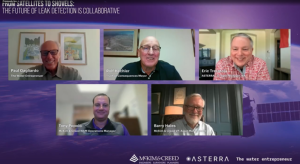
Collaboration is key! The Water Entrepreneur, the mayor of Truth or Consequences, McKim & Creed, and ASTERRA joined forces on a webinar to discuss active water savings in New Mexico.
This collaboration reflected a broader industry shift. AI and satellite intelligence are now foundational tools in modern water infrastructure management, supporting better design decisions and more efficient project delivery.
We recognize organizations taking the lead to ensure infrastructure safety. In The Netherlands, ProRail worked with ASTERRA to enhance rail infrastructure resilience, long-term stability, and safety. In the UK, Network Rail implemented innovative geotechnical measures that manage track integrity and reduce risks associated with moisture-related soil movement. The Leeds Bradford Airport worked with ASTERRA for critical soil moisture assessments to optimize ground conditions, enhance runway stability, and support overall airport infrastructure resilience.
ASTERRA is working with the UK Coal Authority to assess and reinforce coal tip slopes, reducing the risk of instability and enhancing environmental safety.
In the U.S., infrastructure stability for dams and levees is a priority for the Gulf Coast Water Authority, who used ASTERRA as the pro-active solution for levee system maintenance to preventing catastrophic levee failure and protect the safety of their communities
Modeling AI-Powered Water Management
One of the most visible examples of local impact came from the U.S. state of New Mexico, where ASTERRA supported a statewide initiative to reduce water loss using satellite leak detection.
Through this initiative, communities of all sizes gained access to AI-powered infrastructure monitoring, enabling them to identify hidden leaks, reduce water waste, and improve long-term planning. The ongoing program is demonstrating that advanced technology can be successfully deployed at scale while still delivering tangible benefits to small and rural utilities.
New Mexico emerged as a model for how public investment in satellite-based water intelligence can strengthen water resilience across an entire state.
With each collaboration, local communities benefit, while measurable global impact occurs. ASTERRA solutions have been used in over 64 countries, with over 600 customers, and verifying over 191,000 leaks. Globally, ASTERRA has saved over 3.18 billion m3 (840 billion gallons) of potable water, reducing carbon dioxide emissions by 356,387 metric tons, and saving over 1.3 million MWH of energy.
Industry Recognition and Leadership Momentum
In 2025, ASTERRA was named to the GovTech 100, recognizing its leadership in delivering innovative technology solutions for government and public-sector organizations. The recognition highlighted the growing role of AI and satellite analytics in addressing infrastructure challenges worldwide.
This momentum continued with the appointment of James Perry as permanent Chief Executive Officer. Under his leadership, ASTERRA reinforced its focus on measurable impact, global partnerships, and scalable solutions that meet the real needs of utilities and infrastructure agencies.
Throughout the year, ASTERRA team members contributed to industry dialogue through articles, podcast interviews, conference presentations, and webinars. This thought leadership helped utilities better understand how to apply AI leak detection and satellite monitoring to improve performance, resilience, and accountability.
Closing the Loop from Detection to Long-Term Resilience
What distinguished ASTERRA’s work in 2025 was its ability to support utilities beyond initial leak detection.
Utilities increasingly adopted a closed-loop approach that included detection, repair prioritization, validation, and ongoing monitoring. Satellite intelligence became a continuous asset rather than a one-time assessment, supporting data-driven capital planning and climate resilience strategies.
By combining AI-powered leak detection with repeat monitoring and reporting using the EO Discover platform, utilities gained confidence that their investments were delivering measurable results.
Looking Ahead to a Future Both Global and Local
The future of water infrastructure management is both global and local.
Global challenges such as water scarcity, climate variability, and aging infrastructure require scalable solutions. Local outcomes require precise, actionable intelligence that utilities can use immediately.
In 2025, ASTERRA demonstrated that satellite-based AI leak detection can deliver both. Thank you for joining us in this mission. We look forward to an even more impactful 2026!
A year-end look at how ASTERRA solutions scaled across regions while delivering local, actionable outcomes Water utilities and infrastructure agencies...
Water is one of Mexico’s most vital and strained resources. With diverse geography, a rapidly growing population, and large urban...

By Roy Zenou, Account Manager at ASTERRA Earlier this year, Emma Lean of SUEZ, together with Nick Haskins—whose influence still...